Saturday, December 11, 2010

China – Aggressor on all fronts?

Liu Xiabao
Our northern neighbour – China – is a very sensitive country which readily moves to aggression both verbally and by other means if applicable. The latest tussle is regarding India’s diplomatic participation at the Nobel peace prize awarding ceremony at Oslo on Dec 10, 2010. With Chinese premier Wen Jiaobao due to visit India on Dec 15-17, the Chinese threats hinted at having undesirable consequences on the dignitary’s visit. The Indian government dillydallied for some time in the usual fashion of the Manmohan Singh government, but took a brave and commendable decision at last to attend the ceremony citing that the function was a multilateral one and there were no bilateral issues with China related to the Indian ambassador’s presence during the meeting at Oslo, Norway. China vehemently protested belittling India as a ‘former colonial country which is incapable of taking decisions independently’. Some comment! That too, coming from a nation which doesn’t even know what democracy is and in which the people are simply mocked at by Communist party bosses!

Tiananmen Square Massacre
But why China was so upset over a simple ceremony? The Nobel committee decided to award 2010 peace prize to Liu Xiabao, who is a Chinese dissident, serving a 11-year prison term in an undisclosed prison in China. His crime? Advocating for democracy, no less! He campaigned to allow multiple parties to compete in the elections, which the dictatorial communists are not willing to concede! In China, the Communist party is the sole political group allowed to contest elections, and the people are allowed to vote only for them. With 100% of the votes garnered by the Communists, this party and the Chinese electoral system itself is a blotch on human civilization. Xiabao’s crimes are compounded by his participation in the Tiananmen square student protests in 1989 in which about 5,000 of the unarmed students who were demanding democratic rights which the people in India take for granted, were brutally massacred by the Communist-led People’s Army. The blood-curdling moment involved trampling of students under the slow moving battle tanks which transformed the protest into pulp (literally!).

And what right China has, in demanding friendly terms from India? It is a known fact that China resorted to nuclear proliferation when it transferred the technology to Pakistan to prop it up against India. All of Pakistan’s missiles were given or developed with China’s technology. Recently, it started a practise of stapling visas to Kashmiri people, without stamping it on the Indian passports held by them, in an effort to demarcate Kashmir as a disputed territory and questioning India’s suzerainty on the state. With such big-brotherly attitude, the Indian ambassador’s presence at the Nobel award ceremony came as a sweet reprisal. China may try to learn something about diplomacy for the time being!

Thursday, November 11, 2010

Endosulfan - Who Is the Real Culprit in Kerala?

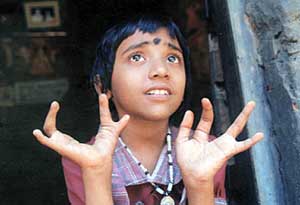
This heart rending image of a deformed girl from Kasargod district in Kerala, India brings to our notice the stark realities of indiscriminate and excess use of hazardous pesticides without the least concern for the well being of people inhabiting near the plantations. Northern Kerala is particularly suited for the cashew crop, which was introduced in India by the Portuguese in 16th century from Brazil. Since the climate is ideally suited for the crop, it has struck deep roots in the Kerala soil and has become as much a Kerala crop as pepper. This small state on the western coast of India is notorious for its communist ideals which are still advocated fiercely, often with physical force by its adherents. No wonder, most of the large industries in Kerala are state-owned and managed (most often) by illiterate and corrupt politicians, but that’s another story. The Plantation Corporation of Kerala is a state-owned enterprise in the agricultural sector, whose sole job is to produce rubber, cashew, oil palm and such crops and sell the products. In 1976, the corporation decided to employ Endosulfan in its cashew estate on the hills nearby Padre village in Kasargod district of Kerala. Like how they did in their rubber plantations, the corporation used the new, and highly toxic pesticide using helicopters. The villagers of Padre draw water from four streams, Kodenkeri thodu, Swarga, Pathadka and Badiyaru which run through the plantation. Naturally, the water became toxic and the unsuspecting public drank it leading to severe health, neurologic and reproductive complications, with the image of the child being a minor one of them. We’ll find more serious deformations and diseases among the other members of the village.

Several studies have documented that endosulfan can affect human development. Researchers studying children from Padre have linked endosulfan exposure to delays in sexual maturity among boys. The researchers compared the villagers to a control group of boys from a demographically similar village that lacked a history of endosulfan pollution. Relative to the control group, the exposed boys had high levels of endosulfan in their bodies, lower levels of testosterone, and delays in reaching sexual maturity. Birth defects of the male reproductive system including cryptorchidism (the absence of one or both testes from the scrotum) were also more prevalent in the study group. The researchers concluded that "our study results suggest that endosulfan exposure in male children may delay sexual maturity and interfere with sex hormone synthesis."

Endosulfan (chemical name - hexachlorocyclopentadiene) is a highly effective pesticide, developed in 1954 by Hoechst AG, now Bayer CropScience. Current annual world production is 12,800 tons, out of which 8,500 tons are produced in India by three players, Excel Crop Care, Coromandal Fertilizers and the state-owned Hindustan Insecticides. 4,500 tons are for domestic use and 4,000 tons are exported from India. It is no wonder why the government of India strongly resisted attempts in international fora to include the pesticide under the Stockholm protocol which attempts to restrict the use of Persistent Organic Pollutants (POP). With more than two-thirds of the world production at home, who would let that money go? Moreover, one among the three companies is a state-owned one with all profits going to the government alone.

The Plantation Corporation has long since stopped aerial spraying of Endosulfan. The last such application of pesticide was in 1991. Since it is clear that the hundreds of people who had lost the reason for existence and have become preys of a chemical disaster which could be compared to the tragedy at Bhopal in 1984, are the victims of an industrial disaster, they must be compensated accordingly. Nothing can bring their happiness and well being back - those are irretrievably lost – but still, an enlightened society have what are available to them to give to those poor wretches, money and medical care.

So what is the solution to ensure that such incidents don’t happen in future? Is it the ban on Endosulfan? Absolutely not, by any means! Any chemical, with pesticides in particular are highly toxic and should be handled with utmost care. In this present case, the indiscriminate aerial spraying was the culprit and the company which did it must pay dearly for the lives it has devastated. Surprisingly, the Plantation Corporation has managed to go scotfree by giving a pittance because it is a state-owned enterprise! The communists, who are ruling Kerala at the moment is spearheading a campaign to ban endosulfan, like the chemical was the culprit. The people who hold Doe Chemicals which acquired Union Carbide after the Bhopal tragedy responsible for the gas disaster are mum on the role of Plantation Corporation of Kerala. Being a state-owned company, does it confer the right to mercilessly extinguish the light in the lives of people? And why ban Endosulfan, when the real criminals escaped and are running agitations against the chemical? If a car kills a person in an accident, who is responsible, the car driver or the company which manufactured the car? Such simple logic is lost on those who go out like herds following a long since discarded political system in the world.

When Monsanto came out with Bt Brinjal, which claimed that pesticides were not required for the crop (Endosulfan is the most widely used pesticide for brinjal cultivation), these same people opposed that too! They seem to have gone blind with the outdated political philosophy they seek to propagate. Kerala seems to have no wayout from this political quagmire, as all the political parties here are centre-left, with almost similar ideologies and action plans.

Friday, November 5, 2010

A Bad Day for Airbus A380


 The damaged engine of Qantas flight in Singapore


A Qantas A380 Super Jumbo Jet flying from Singapore to Sydney developed engine problems 15 minutes into the flight, while flying over Indonesia's Batam Island yesterday, Nov 4th, 2010. The engine nearest to the fuselage developed serious problems and exploded, ejecting a portion of the cowl midair which fell on a residential area down below. Even though the plane could operate with the remaining three engines, the pilot decided to go back to Singapore's Changi Airport as a safety measure. After the plane touched down in Singapore, the engine closest to the fuselage on the left wing had visible burn marks and was missing a section of plate that would have been painted with the red kangaroo logo of the airline. The upper part of the left wing also appeared to have suffered some damage. No one among the 440 passengers and 26 crew suffered any injury. The issue gathered so much international attention mostly because the plane was A380 which is the latest wide-bodied passenger jet. Just an year back, on Sep 29, 2009 a A380 of Singapore Airlines flying from Paris to Singapore developed a fault on one engine after two-and-a-half hours into the flight forcing a return to Paris.

Qantas has landed its entire fleet of six A380s pending detailed enquiry. This is a significant number, as there are only 37 planes of this class operating worldwide. The A380 comes with a choice of engine by the client, with the options being Trent 900 of Rolls Royce and GP7200 of General Electric - Pratt & Whitney joint venture company, with most of the customers opting for Rolls Royce. A similar engine, the Trent 1000 which was being tested on Boeing's DreamLiner 787 jet exploded earlier this year, raising fears about the airworthiness of the superbly modern and technically advanced Trent series engines. Rolls Royce need to address these issues in right earnest and allay the fears. The Federal Aviation Administration in the U.S. has declared that it could announce restrictions on flying A380 if Airbus can't allay fears on its turbines. The bad press for its star model is spelling trouble for the beleaguered European aircraft manufacturer, owing to the huge developmental cost of this doubledecker aircraft, which has run into 12 billion Euros (Rs. 75,000 crores!). The order book is also not scintillating by any means. The total orders fell from 85 in 2001 to just 4 in 2009, though it has jumped to 32 in 2010, all of them from Emirates Airlines. The sale is dismal in USA and Japan, probably due to severe pressure from Boeing.


 A380 makes its debut landing at Hong Kong


With a take off weight of 544 tons and a wing area of 845 sq.m, this engineering marvel can carry 853 passengers in its all economy class (or 525 persons in three-class structure) double decker fuselage powered by four engines. Its cabin has an area of 478.1 sq.m, 49% more space than the next largest airliner, Boeing's 747-400. Its design range is 15,200 km and a maximum cruising speed of 900 kmph (Mach 0.85). It will be disheartening to all people rooting for human progress in the skies. More than Airbus or Rolls Royce (whose share prices dipped due to the incident), any setback on the flights of these dream jet would be a blow to global engineering itself. This does not mean that we should push the issues under the carpet. On the contrary, all safety issues should be promptly sorted out and the airliner be put in service without any hitch. Any knee-jerk reaction, like Qantas' grounding all its A380 fleet would help only to spread panic which is unwarranted. Let reason prevail!


Sunday, October 31, 2010

Consumer Protection Links

This post is dedicated to provide links to consumer protection as advertised by concerned agencies. 

1. If the fine print doesn't match the bold-lettered claims:

When you go through the 'conditions' which apply, the offer may not be as tempting and beneficial as it appeared to be. So, the next time you see an offer/festive period bargain deal, check the hidden aspects under star ("conditions apply").

For online complaint filing, log on to: www.core.nic.in or call 1800-1804566

Consumers can call:
National Consumer Helpline: 1800-114000 (Toll free from BSNL/MTNL lines)
011-27662955, 56, 57, 58 (Normal call charges apply) - 9.30 am to 5.30 pm mon-sat

Wednesday, October 20, 2010

Illustrious days ahead for Indian science

Indian ministry of Environment and Forests has finally accorded sanction to the India-based Neutrino Observatory (INO) to be built in the Bodi West Hills (BWH) in Tamil Nadu. The project will be implemented in the reserve forest area with minimal damage to the tree cover. The primary goal of the observatory is to study the properties and interactions of weakly interacting, practically massless subatomic particles called neutrinos. Neutrinos are produced abundantly in nuclear reactions like in the sun, supernovae and as such, but thanks to being massless, it simply passes through earth and sun, making it difficult to detect. Billions of neutrinos stream through our bodies every second, yet only a handful will be scattered by our bodies in our entire lifetime. That’s why they are often called ‘ghost particles’.


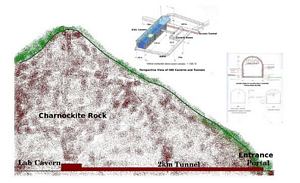
Schematic of Neutrino observatory under Bodi West Hills


The neutrino was proposed by Wolfgang Pauli in 1930, but it took 26 years to detect it experimentally. In 1956, Frederick Reines and Clyde Cowan found evidence of neutrino interactions by monitoring a volume of cadmium chloride with scintillating liquid near to a nuclear reactor. Reines was jointly awarded the Nobel prize in Physics in 1995 for this work. There are three types of neutrinos, named electron-neutrino, tau-neutrino and muon-neutrino. They are denoted by the greek letter v (nu) and are affected only by the ‘weak nuclear force’, one of the four fundamental forces in nature. Raymond Davis Jr. and Masatoshi Koshiba were jointly awarded the 2002 Nobel Prize in Physics; Davis for his pioneer work on cosmic neutrinos and Koshiba for the first real time observation of supernova neutrinos. The detection of solar neutrinos, and of neutrinos of the SN 1987A supernova in 1987 marked the beginning of neutrino astronomy of which the INO to be installed in India is a part of. The detection and study of these tiny particles assumes significance when we consider the fact that even though possessing a very small mass, the enormous number of them makes the total mass a prominent place in the study of the evolution of the universe.


Detection of neutrinos is one of the most technically challenging activities in science. Because they are very weakly interacting, detectors must be very large to detect a significant number of them. They are often built underground in order to isolate the detector from cosmic rays and other background radiation. The overburden provided by the earth matter is transparent to neutrinos whereas most background from cosmic rays is substantially reduced due to their absorption by the earth. The INO will be built in a cavern set in massive charnockite rock (group of igneous rocks found in South India with those in Tamil Nadu known to be the hardest). The cavern will be excavated by drilling a tunnel of 2 km in length under the peak designated as 1589 so that there is vertical overburden of about 1300 m. The minimum vertical cover required is 1000 m to filter out unwanted radiation. The actual site is 2 km from Pudukkottai, 14 km from Bodi and 110 km from Madurai.


Location of the observatory which will be beneath the peak


The primary research instrument will consist of a 50,000 kg magnetized iron particle physics calorimeter with glass Resistive Plate Chamber (RPC) technology as the sensor elements. A prototype of the INO detector with 14 layers, measuring 1m x 1m x 1m is already operational in the VECC, Kolkata. The 35 ton prototype is set up over ground to track cosmic muons. In 2008, INO started a graduate training program leading to Ph.D. Degree in High Energy Physics and Astronomy to deal with the shortage of particle physicists. The Primary goals of the INO are the following.

  1. Unambiguous and more precise determination of Neutrino oscillation parameters using atmospheric neutrinos.
  2. Study of matter effects through electric charge identification, that may lead to the determination of the unknown sign of one of the mass differences.
  3. Study of charge-conjugation and charge parity (CP) violation in the leptonic sector as well as possible charge-conjugation, parity, time-reversal (CPT) violation studies.
  4. Study of Kolar events, possible identification of very-high energy neutrinos and multi-muon events.

The INO includes nearly 90 scientists from 25 institutions, with the Tata Institute of Fundamental Research (TIFR) as the nodal institution. The construction is expected to start in 2011 and the first module of the detector will start taking data by 2016. Immediately after that, the subsequent modules will be constructed. The present cost estimate is Rs. 1200 crores (US $ 273 m), including Rs. 950 crores (US $ 216 m) for the facility and the remaining for providing infrastructure arrangements.


There are four major neutrino detecting laboratories in the world: Sudbury in Canada, Soudan mines in the USA, Kamioka in Japan and under the Gran Sasso mountains in Italy. The first two are located in mines and house relatively much smaller detectors than the other labs that are accessed by a road tunnel. One of the earliest laboratories created to detect neutrinos underground in the world was located more than 2000 m deep at the Kolar Gold Field mines in India. The first atmospheric neutrinos were detected in this facility in 1965. The lab was closed due to the closure of the mines. So, India is very much experienced in this field.


With such a state-of-the-art subatomic lab, India can confidently step into the high-energy nuclear research arena dominated by CERN. It’s high time that India build a particle accelerator comparable to the Large Hadron Collider and put Indian science at the forefront of world science. We can hope that this INO will be the first confident step India makes in scientific world after a long time of hibernation.


Saturday, October 16, 2010

Victory for Engineering and Technology

October 13, 2010 was just an ordinary day for most people, but for the 33 miners who were trapped inside the San Jose gold and copper mine in Chile, it was the day of deliverance, when they awoke from a nightmare which lasted 68 days. On Aug 5, a mine shaft caved in 300 metres below, blocking the escape route of the people working down under. New cave-ins in the following days made the rescue effort difficult. 17 days later, a drill probe reached the emergency shelter area 624 metres below, to which the miners attached a hand-written note saying that "All 33 of us are well inside the shelter." Once contact was established, food and life support systems reached them and they were kept on tenterhooks as the rescue effort was first estimated to be a long drawn-out one which threatened to go until Christmas. Chile stood solid behind the rescue efforts and experts from about a dozen countries were called in to support the effort. NASA's help to keep up the morale of the people trapped in humid and lone conditions truly helped.

On Aug 29, the miners first talked to their relatives from a radio telephone which reached the shelter and several days later, could establis
h video conferencing and enjoy Chile's soccer match. A powerful drill started on Sep 19 and reached the miners on Oct 9, ending the stalemate. Four days later, all of them were rescued using a capsule named Phoenix. Luis Urzua, who was the shift boss emerged last on the line, creating a Guiness record for the longest underground stay.

This was a great feat for Chilean engineering and technology. They've brought out their best and pleasantly surprised the world by their steadfast determination to bring their colleagues back to life. I'm sure, if this incident had happened in China, they'd have been entombed alive in the deep mine. China is notorious for the languid safety in its mines and the scant regard it holds for the lives of its workers! As per mine safety reports, in 2004, there were 6,027 mining deaths in China whereas in the U.S, only 28 died. Even in India, only 99 workers perished in the same year. Every death is a permanent blotch on the image of the industry, and no effort should be spared to implement new technology and safe practises to bring the workers back to ground level safely.

The long night is past, for the Chilean miners and a new dawn awaits them. How many of them will be willing to go back to mines for a living? They had had the scare of a lifetime during these 68 days and the civil society should ensure that they be given alternate employment in which such a harrowing experience is not likely to recur.

Thursday, September 30, 2010

Ayodhya: Let Rule of Law Prevail

Sep 30, 2010 was a special day for India. From the morning itself, anticipation and a bit of anxiety was in the air. As people moved about their daily lives more or less normally, the question spontaneously popped up when people met together was this, “What would be the outcome of Ayodhya verdict today?”. Yes, the nation awaited the decision of the Lucknow Bench of Allahabad Highcourt with bated breath.


Ayodhya was a political and religious hotspot for centuries. Ever since Babar, the first Mughal emperor destroyed the temple of Ramjanmasthan at Ayodhya and constructed a mosque there in 1528, the location was coveted by both parties. Regular Hindu worship started in 1949 as the building was virtually left vacant by the Muslims, without any form of Islamic worship. Ayodhya assumed ominous proportions in the 80s when the then Prime Minister Rajiv Gandhi allowed the laying of stone (shilanyas) for a new temple there. Communal passions ignited both parties to take a hostile view of each other. Massive construction movements spearheaded by the Hindu organisations succeeded in 1992 to tear down the disputed structure and erect a make-shift temple. Large scale communal violence erupted at several places in North India in the wake of the demolition, laying waste the lives of hundreds of innocent people of both religions.


The government led by Prime Minister Narasimha Rao awoke with a start from the complacent slumber and took stern action. It dissolved the Uttar Pradesh assembly led by the BJP and banned its sister outfit, the RSS. The onus of deciding on the fate of title suits of the disputed site came on the shoulders of the Lucknow Bench of the Allahabad Highcourt. After decades of legal ramblings, the court came out with the final verdict today.


The Bench, consisting of Justices Sibghat Ullah Khan, Sudhir Agarwal and Dharam Veer Sharma ruled on their majority verdict the following points.

  1. The portion under the central dome of the disputed structure is indeed the birth place of Lord Ram (Ramjanmabhoomi).
  2. The disputed structure was built by Babar after demolishing a massive Hindu religious structure as attested by the Archeological Survey of India. Since the destruction of a religious place of worship violates the tenets of Islam, it was not a mosque.
  3. The disputed site should be split into 3 parts, the part where the idols of Ram are located is to be given to a trust for the upkeep of Ram temple. One part is to be given to Sunni Wakf Board and the third part should go to Nirmohi Akhara.
  4. The Sunni Wakf Board’s plea for upholding title on land was dismissed.

Well, the legal battle is over and the judgement is out. It is clear that the verdict doesn’t please both sides. This itself is an indication of the impartiality of the judges. The Hindu Maha Sabha declared that they are not happy with the decision and the Sunni Wakf Board said they were disappointed with it. Perhaps, this may be the ideal outcome a secular country can hope for! Neither party came out as the sole victor. We should not dwell too much on the past and the court simply couldn’t have put the clock back by ordering a reconstruction of the disputed structure. India should start from here and make the court’s order a shining piece of adoration in its onward march towards the goals of harmony and brotherhood.