Friday, November 5, 2010

A Bad Day for Airbus A380


 The damaged engine of Qantas flight in Singapore


A Qantas A380 Super Jumbo Jet flying from Singapore to Sydney developed engine problems 15 minutes into the flight, while flying over Indonesia's Batam Island yesterday, Nov 4th, 2010. The engine nearest to the fuselage developed serious problems and exploded, ejecting a portion of the cowl midair which fell on a residential area down below. Even though the plane could operate with the remaining three engines, the pilot decided to go back to Singapore's Changi Airport as a safety measure. After the plane touched down in Singapore, the engine closest to the fuselage on the left wing had visible burn marks and was missing a section of plate that would have been painted with the red kangaroo logo of the airline. The upper part of the left wing also appeared to have suffered some damage. No one among the 440 passengers and 26 crew suffered any injury. The issue gathered so much international attention mostly because the plane was A380 which is the latest wide-bodied passenger jet. Just an year back, on Sep 29, 2009 a A380 of Singapore Airlines flying from Paris to Singapore developed a fault on one engine after two-and-a-half hours into the flight forcing a return to Paris.

Qantas has landed its entire fleet of six A380s pending detailed enquiry. This is a significant number, as there are only 37 planes of this class operating worldwide. The A380 comes with a choice of engine by the client, with the options being Trent 900 of Rolls Royce and GP7200 of General Electric - Pratt & Whitney joint venture company, with most of the customers opting for Rolls Royce. A similar engine, the Trent 1000 which was being tested on Boeing's DreamLiner 787 jet exploded earlier this year, raising fears about the airworthiness of the superbly modern and technically advanced Trent series engines. Rolls Royce need to address these issues in right earnest and allay the fears. The Federal Aviation Administration in the U.S. has declared that it could announce restrictions on flying A380 if Airbus can't allay fears on its turbines. The bad press for its star model is spelling trouble for the beleaguered European aircraft manufacturer, owing to the huge developmental cost of this doubledecker aircraft, which has run into 12 billion Euros (Rs. 75,000 crores!). The order book is also not scintillating by any means. The total orders fell from 85 in 2001 to just 4 in 2009, though it has jumped to 32 in 2010, all of them from Emirates Airlines. The sale is dismal in USA and Japan, probably due to severe pressure from Boeing.


 A380 makes its debut landing at Hong Kong


With a take off weight of 544 tons and a wing area of 845 sq.m, this engineering marvel can carry 853 passengers in its all economy class (or 525 persons in three-class structure) double decker fuselage powered by four engines. Its cabin has an area of 478.1 sq.m, 49% more space than the next largest airliner, Boeing's 747-400. Its design range is 15,200 km and a maximum cruising speed of 900 kmph (Mach 0.85). It will be disheartening to all people rooting for human progress in the skies. More than Airbus or Rolls Royce (whose share prices dipped due to the incident), any setback on the flights of these dream jet would be a blow to global engineering itself. This does not mean that we should push the issues under the carpet. On the contrary, all safety issues should be promptly sorted out and the airliner be put in service without any hitch. Any knee-jerk reaction, like Qantas' grounding all its A380 fleet would help only to spread panic which is unwarranted. Let reason prevail!


Sunday, October 31, 2010

Consumer Protection Links

This post is dedicated to provide links to consumer protection as advertised by concerned agencies. 

1. If the fine print doesn't match the bold-lettered claims:

When you go through the 'conditions' which apply, the offer may not be as tempting and beneficial as it appeared to be. So, the next time you see an offer/festive period bargain deal, check the hidden aspects under star ("conditions apply").

For online complaint filing, log on to: www.core.nic.in or call 1800-1804566

Consumers can call:
National Consumer Helpline: 1800-114000 (Toll free from BSNL/MTNL lines)
011-27662955, 56, 57, 58 (Normal call charges apply) - 9.30 am to 5.30 pm mon-sat

Wednesday, October 20, 2010

Illustrious days ahead for Indian science

Indian ministry of Environment and Forests has finally accorded sanction to the India-based Neutrino Observatory (INO) to be built in the Bodi West Hills (BWH) in Tamil Nadu. The project will be implemented in the reserve forest area with minimal damage to the tree cover. The primary goal of the observatory is to study the properties and interactions of weakly interacting, practically massless subatomic particles called neutrinos. Neutrinos are produced abundantly in nuclear reactions like in the sun, supernovae and as such, but thanks to being massless, it simply passes through earth and sun, making it difficult to detect. Billions of neutrinos stream through our bodies every second, yet only a handful will be scattered by our bodies in our entire lifetime. That’s why they are often called ‘ghost particles’.


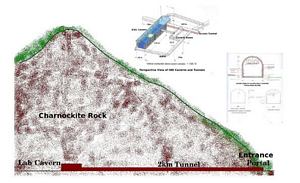
Schematic of Neutrino observatory under Bodi West Hills


The neutrino was proposed by Wolfgang Pauli in 1930, but it took 26 years to detect it experimentally. In 1956, Frederick Reines and Clyde Cowan found evidence of neutrino interactions by monitoring a volume of cadmium chloride with scintillating liquid near to a nuclear reactor. Reines was jointly awarded the Nobel prize in Physics in 1995 for this work. There are three types of neutrinos, named electron-neutrino, tau-neutrino and muon-neutrino. They are denoted by the greek letter v (nu) and are affected only by the ‘weak nuclear force’, one of the four fundamental forces in nature. Raymond Davis Jr. and Masatoshi Koshiba were jointly awarded the 2002 Nobel Prize in Physics; Davis for his pioneer work on cosmic neutrinos and Koshiba for the first real time observation of supernova neutrinos. The detection of solar neutrinos, and of neutrinos of the SN 1987A supernova in 1987 marked the beginning of neutrino astronomy of which the INO to be installed in India is a part of. The detection and study of these tiny particles assumes significance when we consider the fact that even though possessing a very small mass, the enormous number of them makes the total mass a prominent place in the study of the evolution of the universe.


Detection of neutrinos is one of the most technically challenging activities in science. Because they are very weakly interacting, detectors must be very large to detect a significant number of them. They are often built underground in order to isolate the detector from cosmic rays and other background radiation. The overburden provided by the earth matter is transparent to neutrinos whereas most background from cosmic rays is substantially reduced due to their absorption by the earth. The INO will be built in a cavern set in massive charnockite rock (group of igneous rocks found in South India with those in Tamil Nadu known to be the hardest). The cavern will be excavated by drilling a tunnel of 2 km in length under the peak designated as 1589 so that there is vertical overburden of about 1300 m. The minimum vertical cover required is 1000 m to filter out unwanted radiation. The actual site is 2 km from Pudukkottai, 14 km from Bodi and 110 km from Madurai.


Location of the observatory which will be beneath the peak


The primary research instrument will consist of a 50,000 kg magnetized iron particle physics calorimeter with glass Resistive Plate Chamber (RPC) technology as the sensor elements. A prototype of the INO detector with 14 layers, measuring 1m x 1m x 1m is already operational in the VECC, Kolkata. The 35 ton prototype is set up over ground to track cosmic muons. In 2008, INO started a graduate training program leading to Ph.D. Degree in High Energy Physics and Astronomy to deal with the shortage of particle physicists. The Primary goals of the INO are the following.

  1. Unambiguous and more precise determination of Neutrino oscillation parameters using atmospheric neutrinos.
  2. Study of matter effects through electric charge identification, that may lead to the determination of the unknown sign of one of the mass differences.
  3. Study of charge-conjugation and charge parity (CP) violation in the leptonic sector as well as possible charge-conjugation, parity, time-reversal (CPT) violation studies.
  4. Study of Kolar events, possible identification of very-high energy neutrinos and multi-muon events.

The INO includes nearly 90 scientists from 25 institutions, with the Tata Institute of Fundamental Research (TIFR) as the nodal institution. The construction is expected to start in 2011 and the first module of the detector will start taking data by 2016. Immediately after that, the subsequent modules will be constructed. The present cost estimate is Rs. 1200 crores (US $ 273 m), including Rs. 950 crores (US $ 216 m) for the facility and the remaining for providing infrastructure arrangements.


There are four major neutrino detecting laboratories in the world: Sudbury in Canada, Soudan mines in the USA, Kamioka in Japan and under the Gran Sasso mountains in Italy. The first two are located in mines and house relatively much smaller detectors than the other labs that are accessed by a road tunnel. One of the earliest laboratories created to detect neutrinos underground in the world was located more than 2000 m deep at the Kolar Gold Field mines in India. The first atmospheric neutrinos were detected in this facility in 1965. The lab was closed due to the closure of the mines. So, India is very much experienced in this field.


With such a state-of-the-art subatomic lab, India can confidently step into the high-energy nuclear research arena dominated by CERN. It’s high time that India build a particle accelerator comparable to the Large Hadron Collider and put Indian science at the forefront of world science. We can hope that this INO will be the first confident step India makes in scientific world after a long time of hibernation.


Saturday, October 16, 2010

Victory for Engineering and Technology

October 13, 2010 was just an ordinary day for most people, but for the 33 miners who were trapped inside the San Jose gold and copper mine in Chile, it was the day of deliverance, when they awoke from a nightmare which lasted 68 days. On Aug 5, a mine shaft caved in 300 metres below, blocking the escape route of the people working down under. New cave-ins in the following days made the rescue effort difficult. 17 days later, a drill probe reached the emergency shelter area 624 metres below, to which the miners attached a hand-written note saying that "All 33 of us are well inside the shelter." Once contact was established, food and life support systems reached them and they were kept on tenterhooks as the rescue effort was first estimated to be a long drawn-out one which threatened to go until Christmas. Chile stood solid behind the rescue efforts and experts from about a dozen countries were called in to support the effort. NASA's help to keep up the morale of the people trapped in humid and lone conditions truly helped.

On Aug 29, the miners first talked to their relatives from a radio telephone which reached the shelter and several days later, could establis
h video conferencing and enjoy Chile's soccer match. A powerful drill started on Sep 19 and reached the miners on Oct 9, ending the stalemate. Four days later, all of them were rescued using a capsule named Phoenix. Luis Urzua, who was the shift boss emerged last on the line, creating a Guiness record for the longest underground stay.

This was a great feat for Chilean engineering and technology. They've brought out their best and pleasantly surprised the world by their steadfast determination to bring their colleagues back to life. I'm sure, if this incident had happened in China, they'd have been entombed alive in the deep mine. China is notorious for the languid safety in its mines and the scant regard it holds for the lives of its workers! As per mine safety reports, in 2004, there were 6,027 mining deaths in China whereas in the U.S, only 28 died. Even in India, only 99 workers perished in the same year. Every death is a permanent blotch on the image of the industry, and no effort should be spared to implement new technology and safe practises to bring the workers back to ground level safely.

The long night is past, for the Chilean miners and a new dawn awaits them. How many of them will be willing to go back to mines for a living? They had had the scare of a lifetime during these 68 days and the civil society should ensure that they be given alternate employment in which such a harrowing experience is not likely to recur.

Thursday, September 30, 2010

Ayodhya: Let Rule of Law Prevail

Sep 30, 2010 was a special day for India. From the morning itself, anticipation and a bit of anxiety was in the air. As people moved about their daily lives more or less normally, the question spontaneously popped up when people met together was this, “What would be the outcome of Ayodhya verdict today?”. Yes, the nation awaited the decision of the Lucknow Bench of Allahabad Highcourt with bated breath.


Ayodhya was a political and religious hotspot for centuries. Ever since Babar, the first Mughal emperor destroyed the temple of Ramjanmasthan at Ayodhya and constructed a mosque there in 1528, the location was coveted by both parties. Regular Hindu worship started in 1949 as the building was virtually left vacant by the Muslims, without any form of Islamic worship. Ayodhya assumed ominous proportions in the 80s when the then Prime Minister Rajiv Gandhi allowed the laying of stone (shilanyas) for a new temple there. Communal passions ignited both parties to take a hostile view of each other. Massive construction movements spearheaded by the Hindu organisations succeeded in 1992 to tear down the disputed structure and erect a make-shift temple. Large scale communal violence erupted at several places in North India in the wake of the demolition, laying waste the lives of hundreds of innocent people of both religions.


The government led by Prime Minister Narasimha Rao awoke with a start from the complacent slumber and took stern action. It dissolved the Uttar Pradesh assembly led by the BJP and banned its sister outfit, the RSS. The onus of deciding on the fate of title suits of the disputed site came on the shoulders of the Lucknow Bench of the Allahabad Highcourt. After decades of legal ramblings, the court came out with the final verdict today.


The Bench, consisting of Justices Sibghat Ullah Khan, Sudhir Agarwal and Dharam Veer Sharma ruled on their majority verdict the following points.

  1. The portion under the central dome of the disputed structure is indeed the birth place of Lord Ram (Ramjanmabhoomi).
  2. The disputed structure was built by Babar after demolishing a massive Hindu religious structure as attested by the Archeological Survey of India. Since the destruction of a religious place of worship violates the tenets of Islam, it was not a mosque.
  3. The disputed site should be split into 3 parts, the part where the idols of Ram are located is to be given to a trust for the upkeep of Ram temple. One part is to be given to Sunni Wakf Board and the third part should go to Nirmohi Akhara.
  4. The Sunni Wakf Board’s plea for upholding title on land was dismissed.

Well, the legal battle is over and the judgement is out. It is clear that the verdict doesn’t please both sides. This itself is an indication of the impartiality of the judges. The Hindu Maha Sabha declared that they are not happy with the decision and the Sunni Wakf Board said they were disappointed with it. Perhaps, this may be the ideal outcome a secular country can hope for! Neither party came out as the sole victor. We should not dwell too much on the past and the court simply couldn’t have put the clock back by ordering a reconstruction of the disputed structure. India should start from here and make the court’s order a shining piece of adoration in its onward march towards the goals of harmony and brotherhood.

Monday, August 23, 2010

Does this ungrateful country deserve aid?

2010 has been a severe year of Monsoon in south east Asia, particularly so, in Pakistan. Flash floods and landslides caused by rains hit north-western Pakistan and Pak-Occupied Kashmir on July 29th. The situation worsened further in the next two weeks, with death toll exceeding 1600, rendering 15 million people affected by it. The loss to crops were so huge that the economy is expected to slump by about 2% this year.

International aid has been pouring into Pakistan ever since the grave situation existing in the North was disclosed to the world by western media. Pakistan is too proud to accept incapacity which would rather let its people die silently in the flood than the world knowing the pathetic state it has come to be. Based on the statistics provided by NDMA (National Disaster Management Authority) of Pakistan dated Aug 21, 2010, a total of US$ 526.3 million has been pledged. The category wise distribution is as follows – Western nations US$ 321.4 m (61.1%), Muslim nations US$ 153.43 m (29.2%), International aid including U.N. US$ 27 m (5.1%) and Asian nations US$ 24.41 m (4.6%). One thing comes out in stark contrast – the Muslim nations have virtually let their brother to his fate in this hour of crucial need. Those nations which control the enormous middle-east oil revenue has not even bothered to offer some assistance. An ordinary Pakistani considers the U.S, U.K and other western democratic nations as evil and lends moral support (at least) to extremist elements vowed to crush democracy and unbelievers. But the hard facts paint a totally different picture. Pakistan has received the lion’s share of its aid (65.7%) from unbelieving Kafirs, who are guided by the principles of philanthropy and compassion. Pakistan’s bosom friend China has pledged only a paltry sum of US$ 9 m (1.7%). China, which aspires to become the world’s greatest financial power by 2030 is undisturbed by the grave living conditions of the flood victims so that not even a considerable sum is offered. Read this along with Pak’s arch enemy, India’s offer of a preliminary aid of US$ 5 million, which is not even mentioned in the list put together by NDMA mandarins sitting safely and comfortably in Islamabad. Pak has categorically refused to accept aid from India and demanded her to route it through international channels if she want it to be accepted by her haughty and irresponsible neighbour.


One of the Pakistani street protests against democracy and western nations.


Pakistani religious leaders trample upon the national flags of India, U.S. and Israel during protest rallies which are routine there.


Pakistani resentment against the West goes back to the Muslim experiences of the Crusades in the 11th century! Needless to say, such deep rooted hatred is not going to subside any time in the conceivable future. Such ill-conceived political notions colour every aspect of Pakistani response. The world viewed with horror the gruesome beheading of the American journalist, Daniel Pearl with a blunt knife by Muslim terrorists. Even now, Taliban has threatened the western aid workers with death. It is an open secret that the common folk in Pakistan support these extremist outfits in general, otherwise how can you account for the truth that the top brass of Al Qaeda, including Osama Bin Laden can stay peacefully in that country? Extremist elements threatened the head of U.S.Aid in Pakistan with death and he fled for his life. Just think about the sarcasm!


Now, reverse the tape to October 2005. A severe earthquake of magnitude 7.6 in the Richter scale jolts most of the Pak-occupied-Kashmir, killing 73,000 people, injuring 100,000, rendering millions homeless. International aid flowed then also. Based on the Wikipedia article titled ‘International response to the 2005 Kashmir earthquake’, we gather that a total of US$ 991.3 million was collected. The category wise contribution turns out to be Western nations US$ 454.9 m (45.9%), Muslim nations US$ 434.5 m (43.8%), Asian nations US$ 51.81 m (5.2%) with China delivering US$ 6.2 m (0.62%) while India gave US$ 25 m (2.52%). We see the same picture as we saw in 2010! It is the western and other democratic nations pledging the lion’s share of aid to a country desperately in need of it.


Look at these telling stories! We are shocked to see the monstrous ingratitude of the Pakistanis. While literally eating from the outstretched hands of helping nations, most of them western, these people feel no compunction to plot against them, help those who destroyed the World Trade Center, masterminded the bombing of the London subway and the Madrid train blasts. Pakistan still harbours Osama Bin Laden, Al-Sawahiri and other Al Qaeda and Taliban leaders. Aren’t these people instructed to imbibe a feeling of gratefulness to people who helped them when it was most urgently needed? How can they articulate Jihad against those hands which fed them when they were starving? How can they make widows and orphans in the West and India who were building roof for their own women and children in the troubled times? Only a demented and degenerate nation can be oblivious to the people who helped her in her hour of need. We can be absolutely sure that once they come out of this trouble, they’ll immediately switch off all memories of the help they obtained and again switch on the propaganda of jihad and violence. No wonder this rogue of a nation demonstrates to what level a theocratic state can stoop. Does this nation deserve aid? Shall we feed them by donating our hard earned money, only to get bombs and missiles in return, when they are healthy again?


Donate liberously and help children like this to return to their homes and live happily.


The answer to the above question is Yes, indeed. The world should be guided by compassion, empathy and sharing. Numerous children are suffering and starving there in the cold, flooded districts of Pakistan. The Islamists who rule them won’t be helping them, they would be too busy with their rhetoric and ugly warmongering. All religions of the world stress on kindness to the weak and atheism also is guided by philanthropy. So, in who’s interest it would be to deny them aid? They are our brothers and sisters, suffering in that forlorn country. We must help them and strive to ensure that they go back peacefully to their homes and continue their lives happily.

Saturday, August 7, 2010

Julia Roberts' New Act of Comedy

Julia Roberts, often called America's Sweetheart has claimed in an interview that she has converted to Hinduism. Aged 42 and winner of the Oscar for Erin Brockowich, she is one of the leading figures in Hollywood. She says that she has been so spoiled with her friends and family in this life and wants to be something quiet and supporting in the next birth! She learned the basic tenets of Hinduism while shooting for the film 'Eat, Pray and Love' in India.

I had a hearty laugh after reading this news item. She says she had learned about Hinduism. Some learning! Probably she is not aware of the basic feature of Hinduism, viz. the numerous castes, some upper, some lower, some in the middle. To which of this caste she has converted into? Without caste, you are not a Hindu, as per the learned Brahmins who interpret religious law even now. I think she has been fooled into the spiritual mumbo-jumbo while in India, whose cultural burden we Indians always bear on our shoulders. Most certainly, she has not heard of many villages of India where lower-caste people are not even allowed to come near the upper-castes. They are not allowed to take water from government-built public wells and their children are still not allowed to attend schools. Sati, the practice of widow-burning when the husband dies, is still practised here and there, occasionally. Even otherwise, we Hindus consider those women who consensually commits suicide on the death pyre of their husbands as semi-divinities who are to be adored. We are easily swayed by superstitions and rumours! Some years back there was a news item which spread like wildfire on the sub-continent. People fed milk on a spoon to the idols of Ganapati and observed with wide-eyed wonder the milk seep into the idol through surface tension.

We Hindus live in a self-hypnotised world. We believe that India had a glorious past in which we surpassed all other countries. Some people even say that ancient Indians developed aviation, had knowledge about string theory and uncertainty principle and had known that there was water in the moon! Not even with tons of salt can you stomach some of the craziest ideas. The fact that nobody else in the world pays a iota of attention to these semi-lunatic claims doesn't deter the diehard enthusiasts. Its a tough task living with a level head in India now.

So, Ms. Roberts, what among these interested you so much to denounce the religion in which you were born and brought up? Or, is this one of your newest acts of setting the fashion? We'd have preferred you to stay the way you was, but a bosom friend of India and our culture. Yes, our culture, even though illogically glorified by some of us, is nonetheless great! We'd have liked to see in you an ambassador of the good will which is to flow from the fountainhead of our age-old traditions and way of life. But, converting to our religion was the last thing we'd have preferred you to do. We'd have gladly and proudly accepted you into our fold, even if you are a Christian!